Getting to grips with an electric toggle switch needn't be a daunting task, even for those who've never picked up a screwdriver with electrical work in mind. Whether you're refreshing a single room or rewiring an entire property, understanding the basics of switch connections will save you time, money, and the hassle of calling out an electrician for a straightforward job. This guide walks you through the fundamentals, the practical steps, and a few handy tips to keep your lighting circuits running smoothly.
In brief
- An electric toggle switch manages power by opening or closing the live circuit, rather than the neutral wire, to ensure electrical safety.
- Proper identification of wire colors, such as red for live and blue or black for neutral, is critical for safe and accurate installation.
- A two-way switch system uses three terminals to allow a single light source to be controlled independently from two different locations.
- Safety protocols include isolating the power supply at the consumer unit and using a multimeter to verify connections before restoring electricity.
- Creating detailed circuit diagrams for each room helps homeowners manage lighting more efficiently and simplifies future maintenance.
- Using high-quality components, such as those from Legrand, improves the reliability of connections and prevents hazards like arcing or overheating.
Understanding electric toggle switch fundamentals and circuit operations
Before you start twisting wires together, it helps to understand what's actually happening inside your walls. An electric toggle switch works by interrupting or completing the flow of electricity along the live conductor, which in turn controls whether a light fitting or appliance receives power. Unlike a plug socket, a switch doesn't touch the neutral wire at all in most standard setups; it simply breaks the circuit on the live side, which is both safer and more efficient from an energy management perspective.
How electric switches function within household circuits
At its core, a switch is a mechanical gate. When you flick it to the on position, you're closing that gate and allowing current to travel through to the bulb or fixture. Flip it the other way, and the circuit is broken, cutting the supply instantly. This might sound simple, but it's worth noting that a toggle switch should always interrupt the live wire rather than the neutral, since switching the neutral would leave the fixture still connected to live voltage even when supposedly off, which is a genuine safety hazard. Many homeowners attempting a DIY switch connection overlook this detail, so it's one of the first things to check.
Recognising wire colours: phase red and neutral blue standards
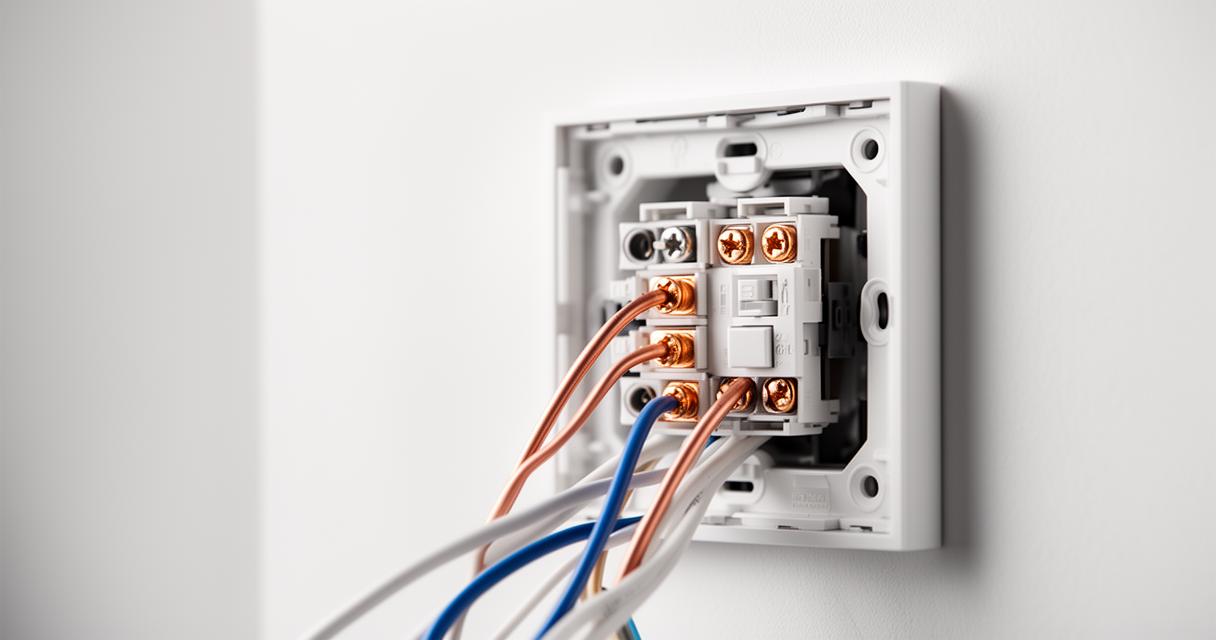
Colour coding exists precisely so that anyone working on a circuit, whether a seasoned electrician or a confident amateur, can identify wires at a glance. The general convention across much of Europe designates red for the phase or live wire and blue for the neutral. It's worth mentioning that older properties in the UK may still have wiring following the previous standard, where red indicated live and black indicated neutral, so always double-check with a voltage tester rather than assuming colour alone tells the full story. When dealing with a switch connection diagram, this colour recognition becomes essential for avoiding costly mistakes.
Step-by-step installation process for two-way switch systems
A two-way switch system allows you to control a single light from two different locations, which is enormously useful for staircases, long hallways, or bedrooms with switches at both the door and the bedside. The wiring here is slightly more involved than a single switch, but the underlying principles remain the same.
Preparing your switch box and terminal connections
Start by isolating the power supply at the consumer unit, then remove the existing switch plate to inspect the switch box and terminal connections already present. You'll typically find either a metal or plastic mounting box embedded in the wall, with terminals labelled for live, neutral, and earth where applicable. For a two-way arrangement, you'll need switches with three terminals rather than the standard two, often labelled common, L1, and L2. Take a photograph of the existing wiring before disconnecting anything; this small step often proves invaluable if you need to backtrack.
Wiring Techniques for Neutral and Live Conductors
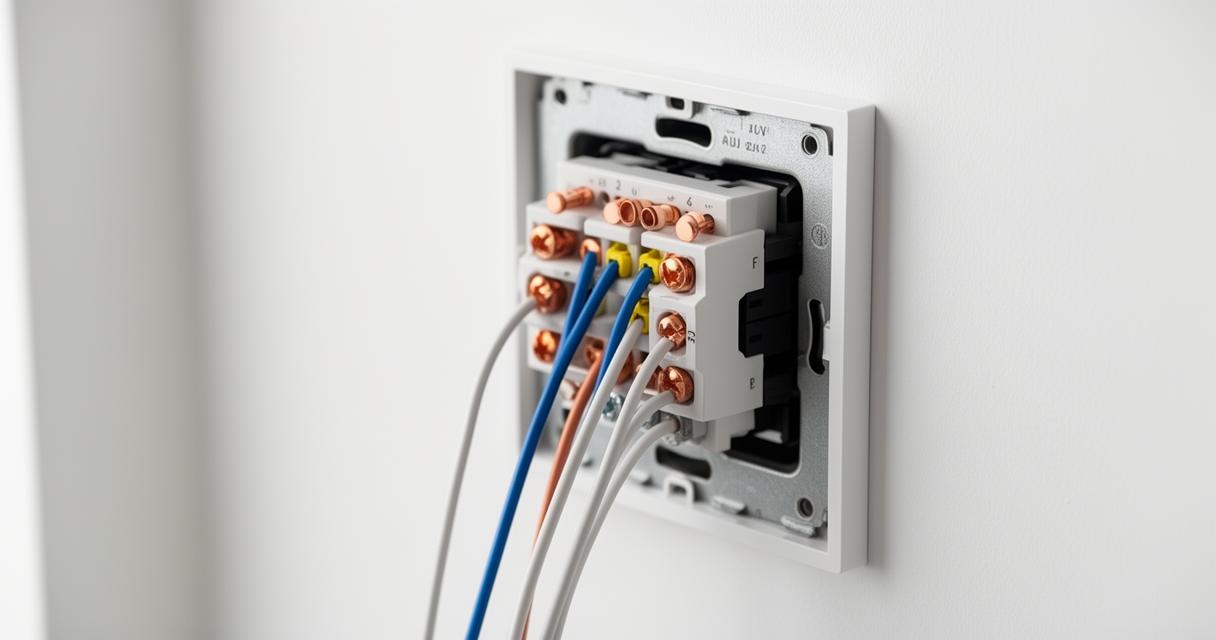
Connect the incoming live conductor to the common terminal on the first switch, then run a pair of strapping wires between the L1 and L2 terminals of both switches. The second switch's common terminal then connects onward to the light fitting. The neutral wire generally bypasses the switch entirely, running straight through to the ceiling rose or fitting alongside the earth conductor. It's good practice to sleeve any bare earth wires in green and yellow sheathing for added protection.
- Always test connections with a multimeter before restoring power
- Ensure terminal screws are tightened firmly to prevent arcing
- Label wires temporarily if working across multiple switches
Optimising lighting control and creating reference circuit diagrams
Once the physical wiring is sorted, thinking strategically about how you manage lighting across your home can genuinely improve both convenience and energy efficiency.
Effective room-by-room lighting management strategies
Different rooms benefit from different switching arrangements. A kitchen might need separate switches for task lighting over worktops and ambient lighting elsewhere, while a living room could benefit from dimmer-compatible switches to adjust mood lighting throughout the evening. Drawing up a simple circuit diagram for each room, noting switch positions, wire runs, and fitting locations, makes future maintenance far simpler and helps you spot inefficiencies, such as lights left running in unused spaces.
Utilising legrand components for dependable electrical connections
When sourcing switches and accessories, opting for reputable manufacturers pays dividends in reliability. Legrand components, for instance, are widely respected across the trade for their consistent build quality and compliance with current safety standards. Choosing well-made terminals and switch plates reduces the likelihood of loose connections, overheating, or premature failure, all of which contribute to a safer and more energy-efficient home overall.